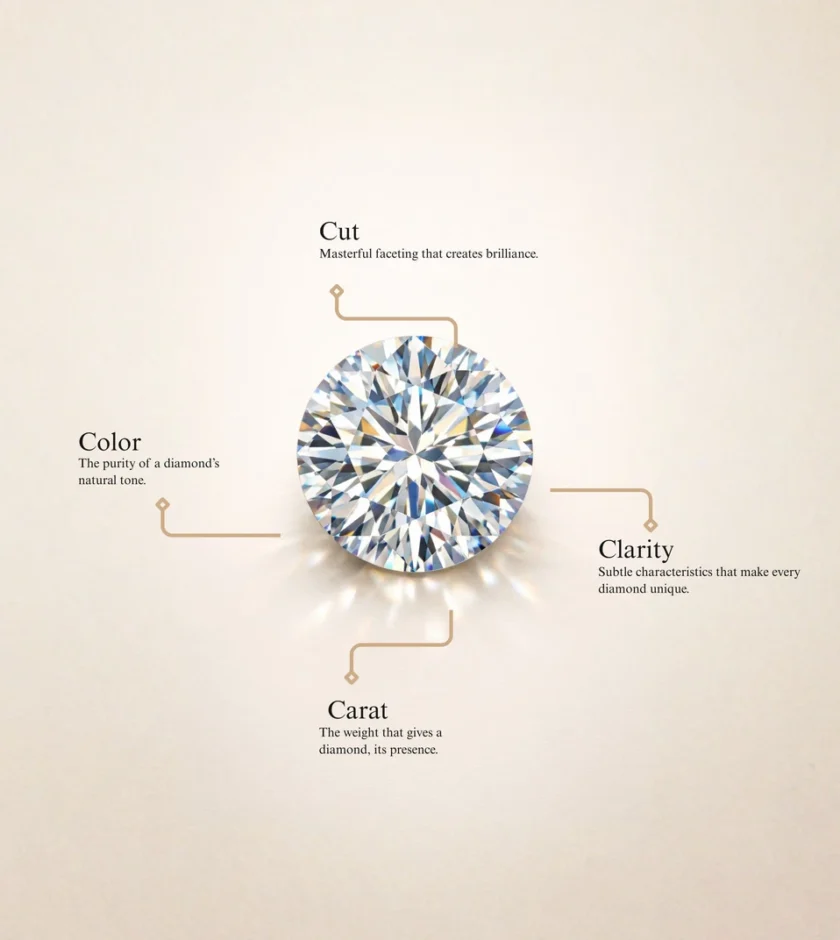
Diamonds are evaluated through four globally recognized characteristics known as the 4 Cs — Cut, Color, Clarity, and Carat Weight. Together, these factors influence a diamond’s appearance, rarity, pricing, and overall visual performance within jewellery.
For retailers, wholesalers, and jewellery professionals, understanding the balance of the 4 Cs helps create collections that align with both customer expectations and commercial practicality.
Cut determines how well a diamond reflects light.
A well-cut diamond appears:
Even high-clarity or high-color diamonds can appear dull if the cut quality is poor.
In fine jewellery, strong cut quality is often prioritized because it has the biggest impact on visual beauty.
Diamond color measures the natural presence of warmth within a white diamond.
The standard grading scale ranges from:
Color visibility depends on:
Near-colorless diamonds are widely used across fine jewellery because they offer a strong balance between appearance and value.
Clarity refers to internal inclusions and external blemishes formed naturally during a diamond’s growth process.
Most inclusions are microscopic and not visible during normal wear.
In commercial fine jewellery, VS and SI clarities are commonly selected for their balance of appearance and pricing.
Carat measures a diamond’s weight, not its visible size.
One carat equals 0.2 grams.
Visual size can still vary depending on:
While larger diamonds are rarer, overall beauty depends on balance rather than size alone.
The strongest diamond selections are created through balance.
For example:
In fine jewellery manufacturing, the goal is not simply maximizing one characteristic, but creating the right overall visual and commercial balance.
The 4 Cs remain the global standard for understanding diamond quality. For retailers, wholesalers, and jewellery professionals, understanding how Cut, Color, Clarity, and Carat Weight work together helps support better sourcing, stronger assortment planning, and more informed jewellery development decisions.